Plazas & Pampas
Jewish life in Uruguay and Argentina, from Montevideo and Buenos Aires to Moisés Ville
Uruguay and Argentina
Eleven days from Montevideo to Buenos Aires and out into the farm country of Santa Fé, following the Jewish immigrants who landed at these river ports and the families who settled the plains at Moisés Ville.
About this expedition
Eleven days across Uruguay and Argentina, following the Jewish communities that formed in two river capitals and in the farm towns of the Argentine interior.
We begin in Montevideo, in the beachfront neighborhoods where most of Uruguay's Jews have lived for a century, then cross the Río de la Plata by ferry from the seventeenth-century streets of Colonia del Sacramento. In Buenos Aires we spend our days in El Once, the district at the center of Jewish life in the city, among its synagogues and shops. Then we fly north to Santa Fé and drive out across the plains.
Moisés Ville is the reason for the journey inland. In 1889 a group of Jewish families fleeing the Russian Empire arrived in Argentina and were settled on farmland hundreds of miles from the coast. They learned to raise cattle and ride, and Argentines came to call them the Jewish gauchos. Their synagogue and cemetery are national landmarks today, and the people who show them to us are their descendants, still living in the town their families built.
The cities tell the other half of the story. Buenos Aires has one of the largest Jewish populations in the Americas, built by waves of immigrants who arrived from Eastern Europe and the Mediterranean and left behind synagogues, theaters and newspapers. It is also where, in 1994, a bombing destroyed the Jewish community headquarters and killed eighty-five people; the rebuilt building and its memorial are part of what we see.
We travel with local historians and community members throughout, and meals are part of the journey rather than a pause in it.
From the Río de la Plata to the Pampas
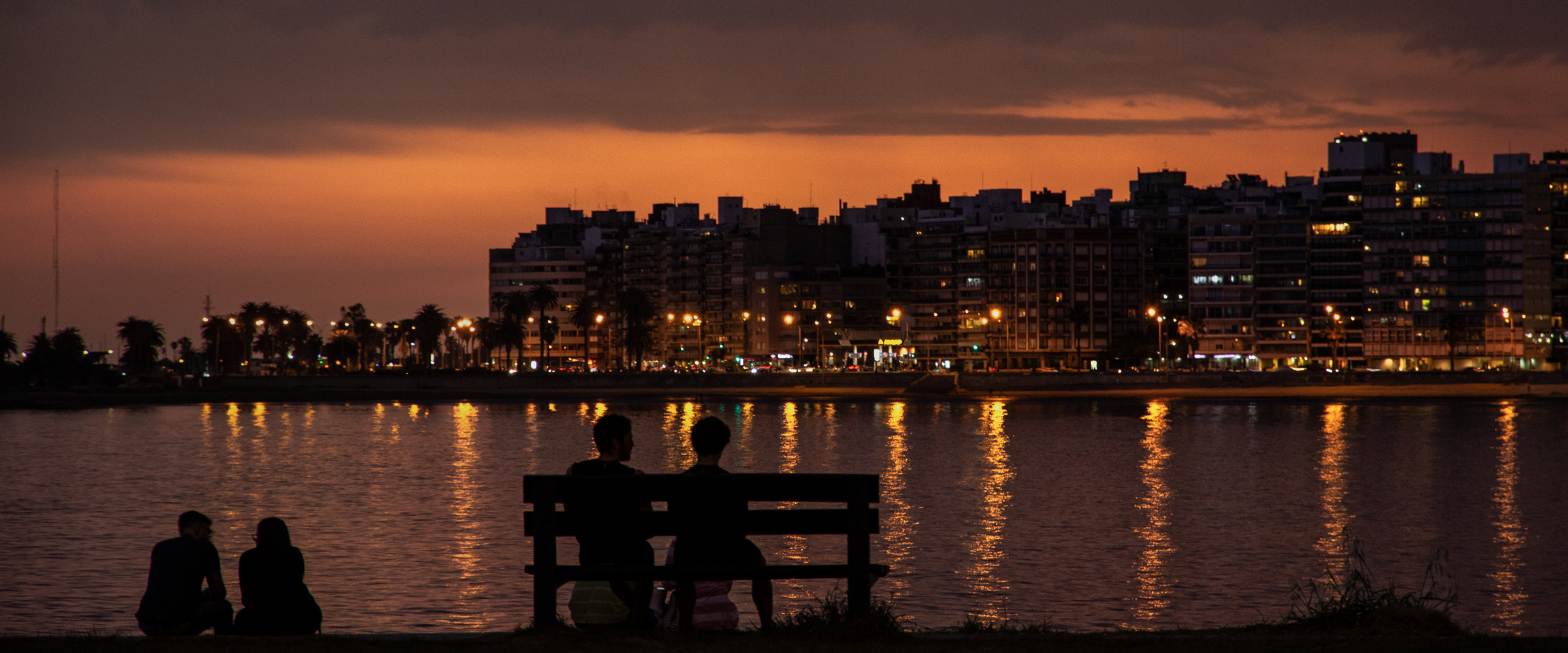
Montevideo. Along the Rambla, encounter a Jewish community woven into the life of the city, from Pocitos to La Kehila.
Why this route?
Jewish South America is usually seen from Buenos Aires. This expedition takes in three places.
Far fewer Jewish immigrants arrived in Uruguay than in Argentina, and the community that formed in Montevideo built one central institution rather than many. Most of it sits within a few blocks of the waterfront, where it has been for a century.
Buenos Aires has one of the largest Jewish populations in the Americas, built by waves of immigrants from Eastern Europe and the Mediterranean. It holds the grandeur of those generations and the hardest chapter of recent Jewish history in the region.
Santa Fé and Moisés Ville are where Jewish Argentina began. A Jewish philanthropist, Baron Maurice de Hirsch, bought land on the Argentine plains in the 1890s and paid to move thousands of families there out of the Russian Empire. They built schools, libraries and synagogues in towns that had not existed a decade before, and their children and grandchildren went on to the cities.
Between the three lie the ferry across the Río de la Plata, the flight north over the plains, and the drive out to a town of a few thousand people where the synagogue is a national monument.
What makes this a New Lehrhaus expedition?
Local historians, guides and community members read each place with us from the inside.
The distances matter too. The ferry, the flight and the long drive out to Moisés Ville retrace the routes the immigrants took, and they make plain why the cities and the farm towns turned out so differently.
The expedition asks only for curiosity. Reading and talks along the way supply the background.
Interested in joining us?
Reserve Your Place (opens in a new tab)Itinerary
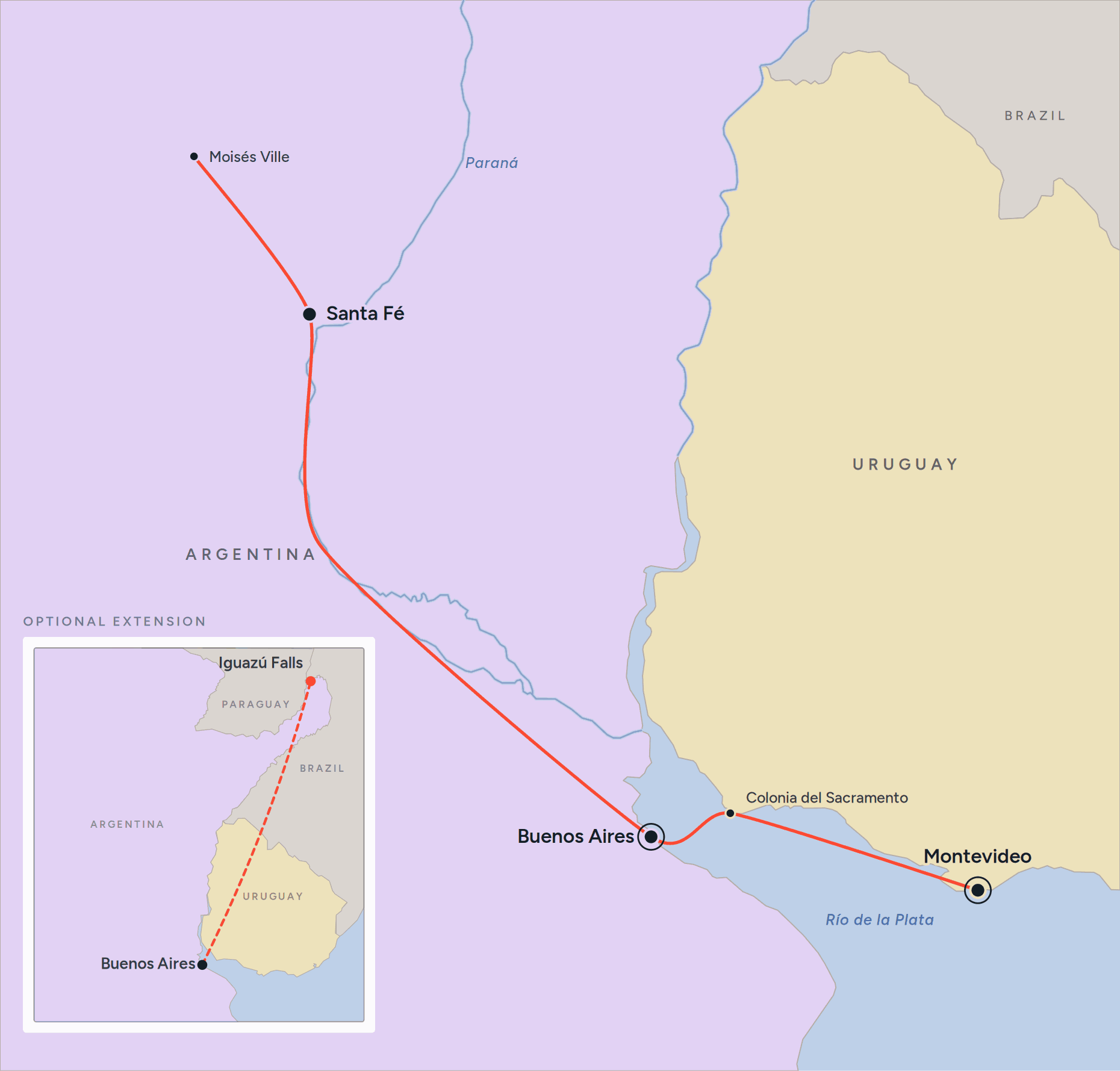
- ① MontevideoThree nights. Jewish Montevideo, the Rambla, and time with the local community.
- ② Colonia del SacramentoEn route. Cobblestone streets, colonial history, and the ferry across the Río de la Plata.
- ③ Buenos AiresFive nights in two stays. El Once, historic synagogues, AMIA, tango, and the life of the Argentine capital.
- ④ Santa FeTwo nights. The Paraná, the local Jewish community, and Argentina beyond Buenos Aires.
- ⑤ Moises VilleDay excursion. Jewish gauchos, historic synagogues, the cemetery, and the agricultural colonies.
- ⑥ Iguazú FallsOptional extension. Two nights. Rainforest, the Argentine and Brazilian falls, and the Garganta del Diablo.