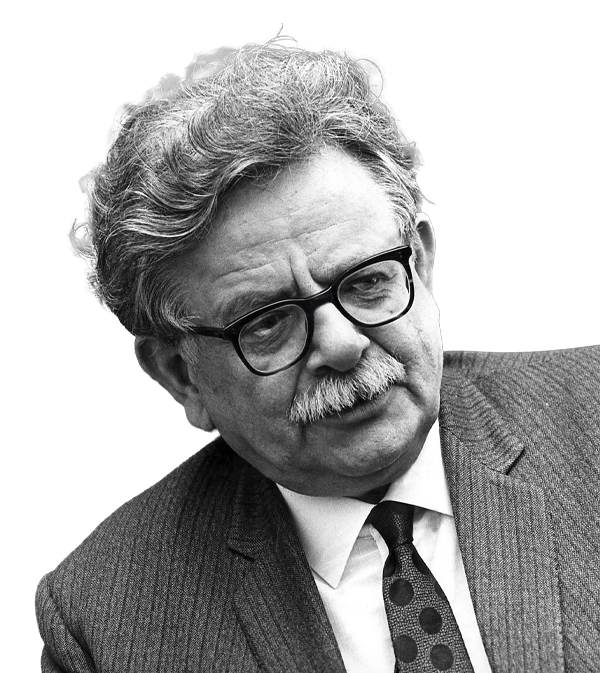
A Companion to the Course

Reading Canetti

One novel. One vast book about crowds. Three volumes of memoir and thousands of aphorisms. Elias Canetti belonged to no school, answered to no discipline, and asked one question for seventy years: how do people come to believe what they believe, and what do those beliefs do to them?

His life in six cities, the day that started his major work, the four men he named in Stockholm, and a reading list to keep beside you for four weeks.
Four Thursdays with William Donahue, starting August 13. Register here.

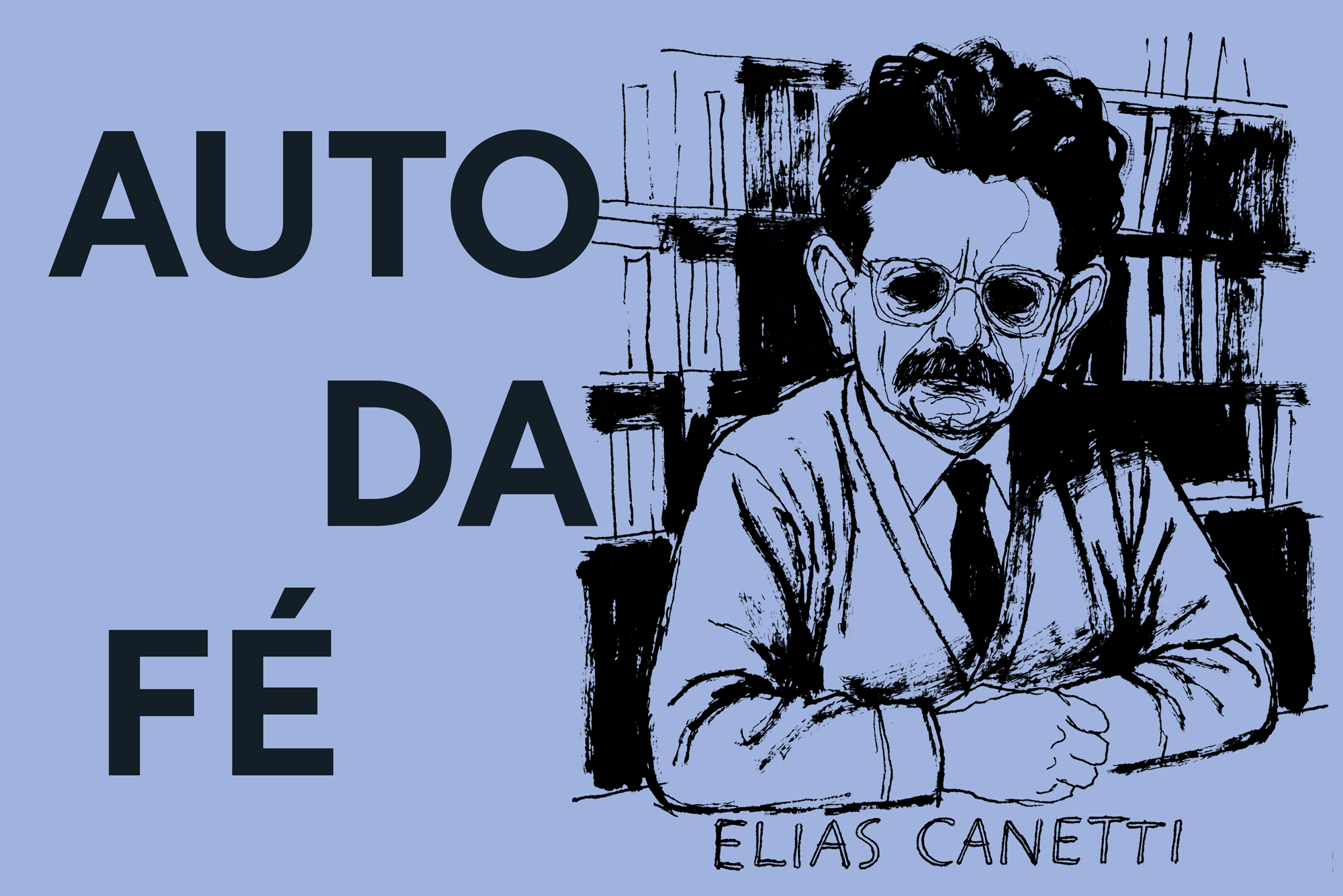
Line illustration of Elias Canetti seated with his arms folded on a table Elias Canetti, 1905–1994
One Book, Three Titles

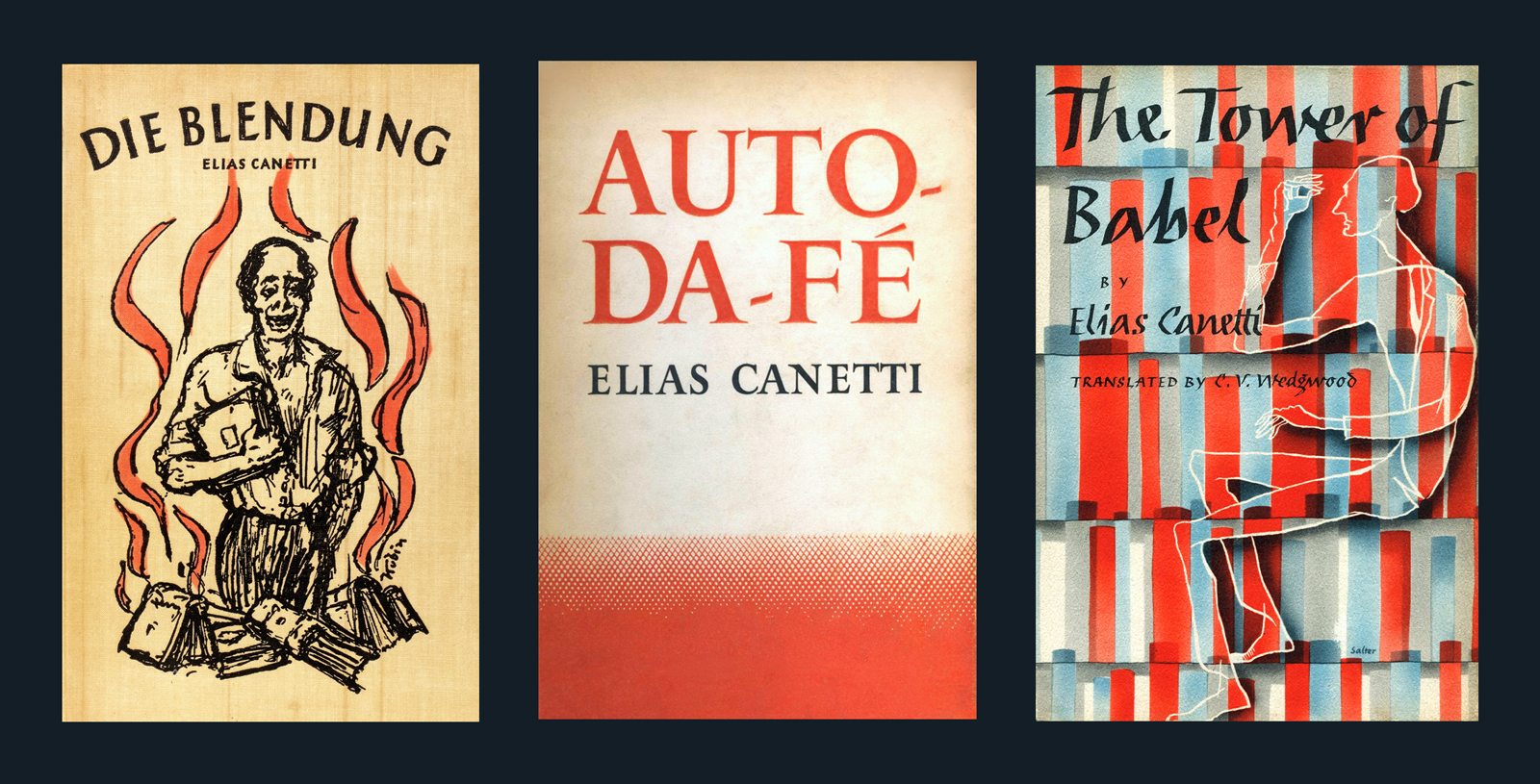
The book appeared under three titles in twelve years. The German name and the English one do not mean the same thing, which is the first problem the novel hands you.

Binding of the 1936 first edition of Die Blendung, showing a man clutching books among flames
Binding by Alfred Kubin
Vienna, 1936 Die Blendung The blinding. Also the dazzle: the glare that stops the eye from seeing.
Dust jacket of the 1946 Jonathan Cape edition of Auto-da-Fe, the title set large in red
Jonathan Cape jacket
London, 1946 Auto-da-Fé The act of faith. The Inquisition’s term for the ceremony that ended in fire.
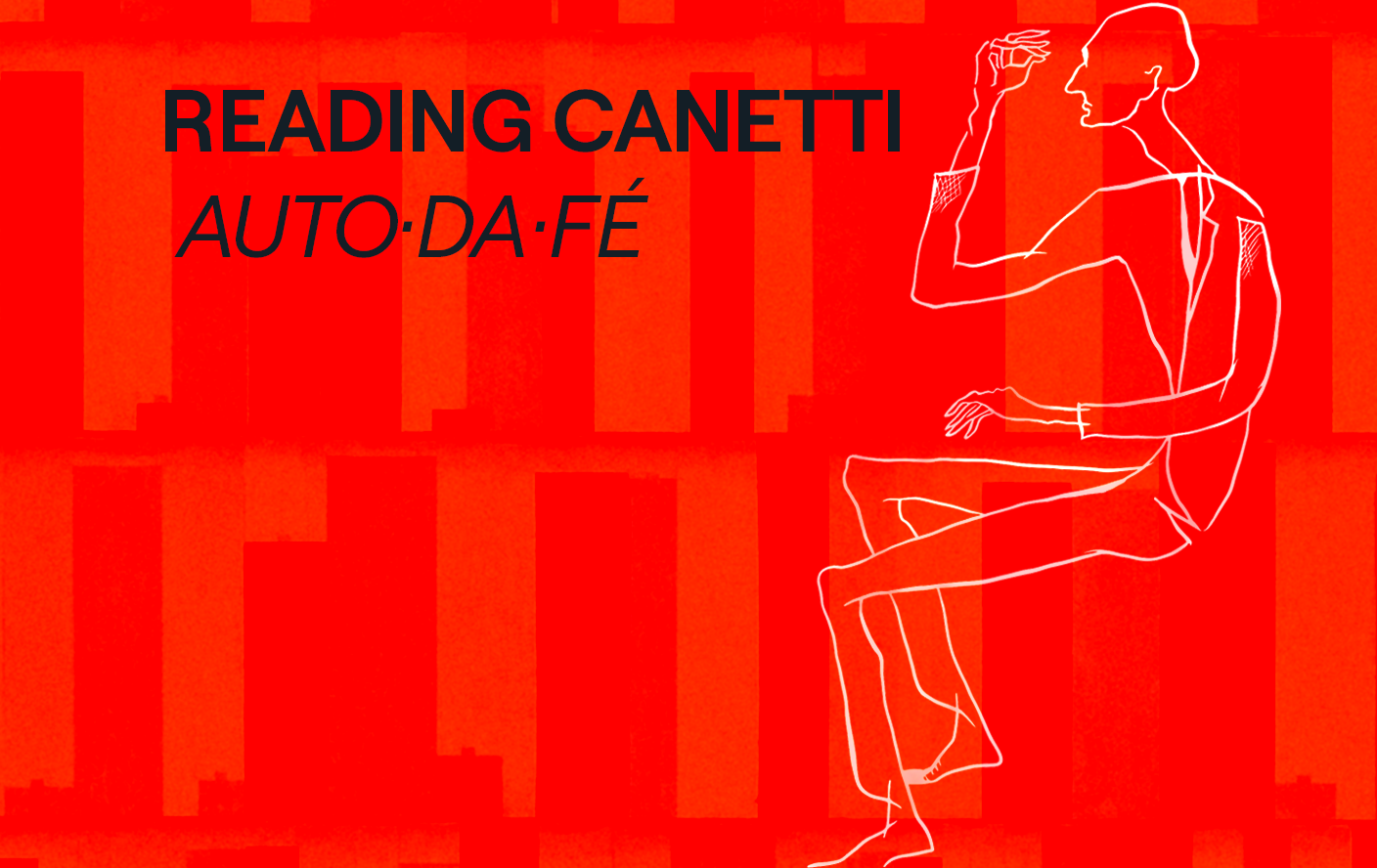
Dust jacket of the 1947 Knopf edition, The Tower of Babel, a figure drawn in white line against a wall of book spines
Jacket by George Salter
New York, 1947 The Tower of Babel Knopf’s title for America. Later editions dropped it and went back to Auto-da-Fé, which the book has carried in English ever since.

Both English editions carry the same translation, by the historian C. V. Wedgwood, better known for her books on the English Civil War. She worked under Canetti’s personal supervision, and hers has been the English text for eighty years.

A Life in Transit

A language he would not give up

Canetti was born into Ladino and learned English and French as a child. He settled on German at eight, because it was the language his parents used when they did not want the children to understand. He never gave it up. When he noted in 1944 why he would go on writing in the language of the people who had driven him out, the answer he gave was because I am Jewish.

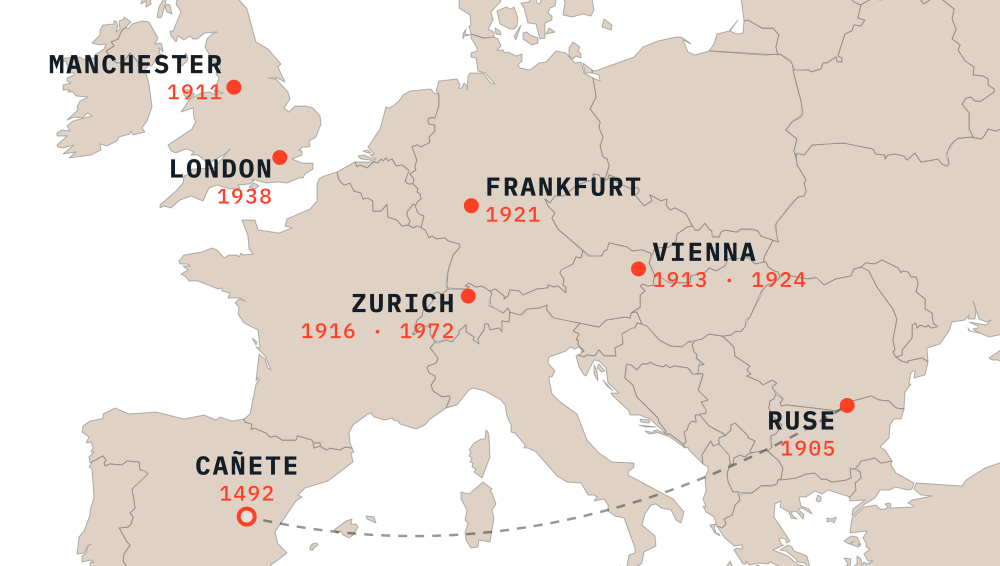
Map of Europe marking the places of Elias Canetti’s life: Cañete in Spain, Ruse in Bulgaria, Manchester, London, Frankfurt, Zurich and Vienna
The six cities of his life, and Cañete, the Spanish town the family left in 1492. The dashed line spans the four centuries between.
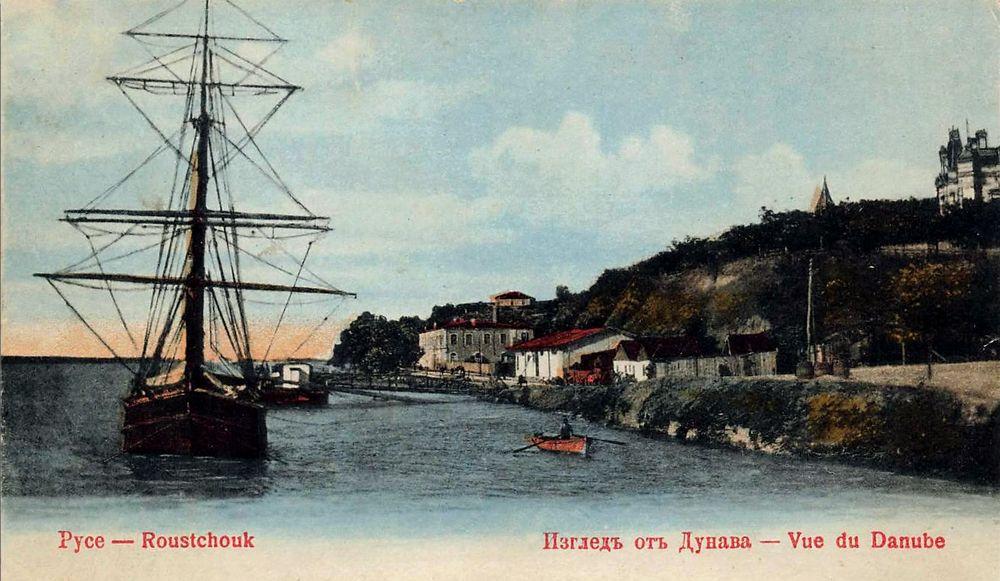
Hand-tinted postcard of Ruse on the Danube, captioned in Bulgarian and French
Ruse on the Danube, where Canetti was born in 1905. The postcard is captioned in Bulgarian and in French.
  1. 1905 Ruse

    Born on the lower Danube in Bulgaria into a Ladino-speaking Sephardic family. The name comes from Cañete, the town the family left in 1492.

  2. 1911 Manchester

    His father moves the family to England. He is six, and it is the first of the uprootings that structure his childhood.

  3. 1913 Vienna

    His father dies suddenly. Canetti treated that death ever after as the event against which all others were measured.

  4. 1916 Zurich

    The school years he remembered most warmly. His mother pulls him out in 1921 for fear he is becoming too content.

  5. 1921 Frankfurt

    He finishes high school through the inflation years. In 1922 he protests after the killing of Walther Rathenau and feels a crowd close around him for the first time.

  6. 1924 Vienna

    He hears Karl Kraus read, takes a doctorate in chemistry in 1929, never works as a chemist, and finishes his novel in the early 1930s.

  7. 1938 London

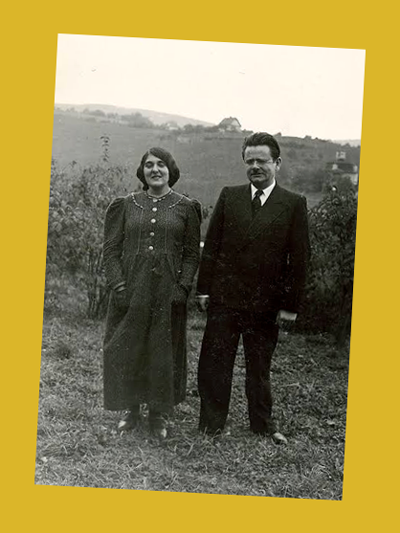
    He and his wife, the writer Veza Taubner-Calderón, leave Vienna in November, days after Kristallnacht. He stays close to forty years.

  8. 1972 Zurich

    His last two decades, back in the city of his best childhood years. The Nobel comes in 1981. He is buried at Fluntern in 1994, steps from James Joyce.

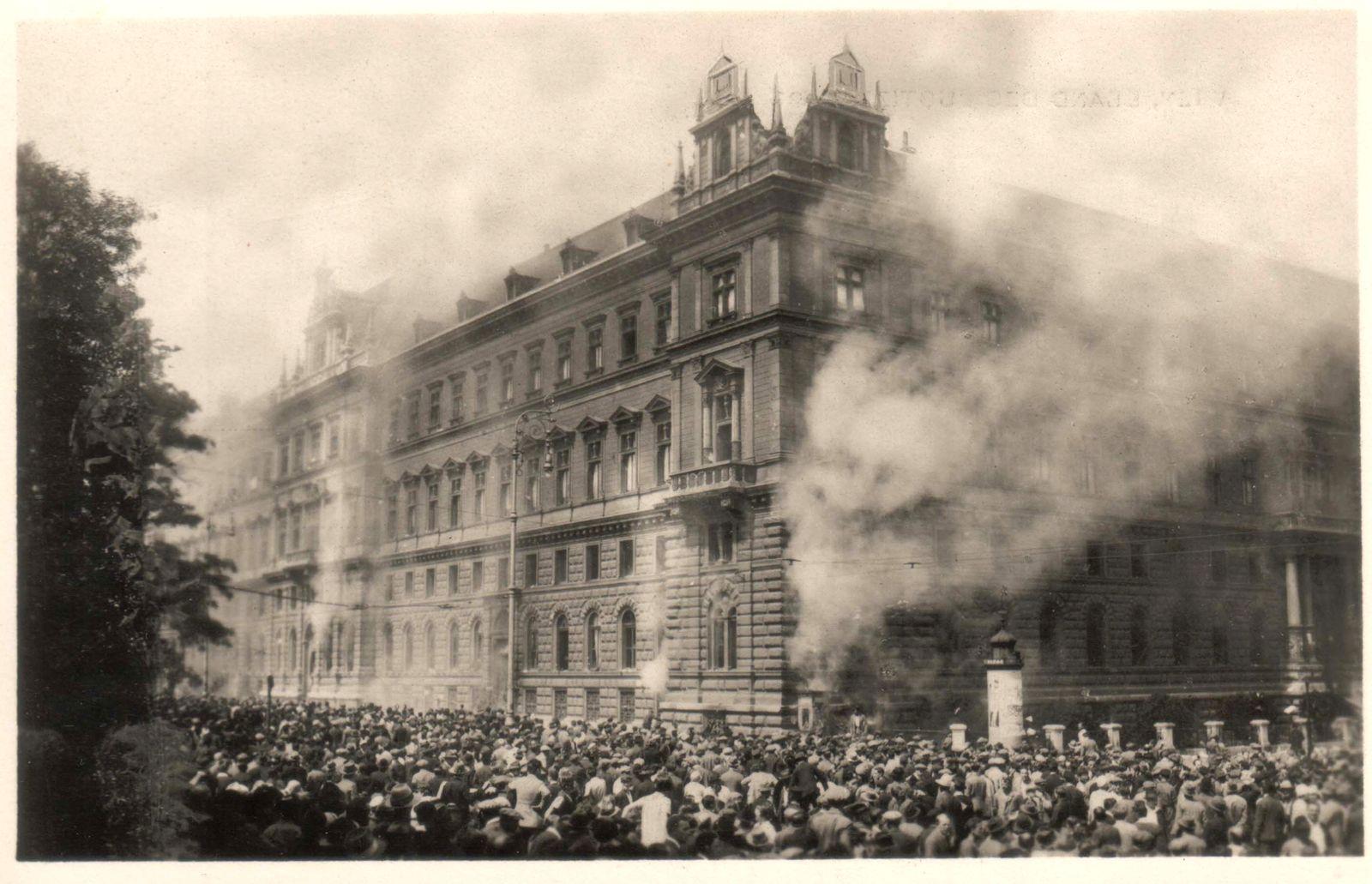
The Palace of Justice in Vienna burning on 15 July 1927
The Justizpalast, or Palace of Justice, Vienna, 15 July 1927.
The Origin of a Book

The day the Palace of Justice burned

In January 1927 right-wing paramilitaries fired on a Social Democratic march in the Burgenland village of Schattendorf, killing a disabled veteran of the First World War and a boy of eight. In July a Vienna jury acquitted them.

The city went into the streets. A crowd filled the Ringstrasse and massed in front of the Palace of Justice. By midday the building was burning, and the firefighters who reached it were driven off with their hoses cut. The police were ordered to fire into the crowd. Eighty-nine people were killed.

Canetti was twenty-two and he was in that crowd. Fifty years later he wrote that it had been the most decisive day of his life since the death of my father. For Canetti there was no higher measure.

The crowd he stood inside had no leader, no organizer, and no plan, and it acted anyway.

He spent the next thirty-three years on that problem. The answer was Crowds and Power, published in 1960, a book that borrows from anthropology and history and belongs to neither. He said afterwards that the novel had come out of the same fire.

This matters for the course. Auto-da-Fé is usually described as a book about a scholar who loses his mind, and it is. It is also where Canetti first takes up the question that held him for the rest of his life: what happens to a mind that has shut the world out. He finished the manuscript in 1931, four years after the fire.

Stockholm, 10 December 1981

Four men, one debt

Canetti did not deliver a Nobel lecture. He is one of the few laureates in literature who declined, which means the minutes he spoke at the banquet are the entire record of what he chose to say on receiving the prize. He used most of them to talk about four dead men.

He began with cities. A person owes a great deal to the cities he knows, and maybe more to those he longed for and never reached. Then there are the few cities that never leave a person: the menacing ones, the ones too big to take in, and the ones memory turns into something better than they were. His three cities were Vienna, London, and Zurich. It may look like accident that it was those three, he said, but the accident has a name and the name is Europe. And Europe must still answer for what it wrought. He had one word for what everyone alive that December was living under: Atemschatten, literally breath-shadow, a breath pall cast over humanity by the constant threat of nuclear destruction.

Then he named the four writers he said had put him on that platform, and told the room what he owed each of them.

Line illustration of Karl Kraus
Karl Kraus

The satirist taught him how to hear, to give himself over to the sound of Viennese speech. Kraus also, he said, inoculated him against war. The debt is recorded in the title of Canetti’s second memoir, which borrows the name of Kraus’s journal: The Torch.

Line illustration of Franz Kafka
Franz Kafka

Kafka, he said, had the gift of making himself small and so could elude the grasp of power. Canetti called this the most necessary apprenticeship of all and described himself as having served it under Kafka for life.

Line illustration of Robert Musil
Robert Musil

Musil taught him how to wait: you can give a work decades and still not know whether it will ever be finished. He called that undertaking a recklessness made mostly of patience, requiring a stubbornness close to inhuman.

Line illustration of Hermann Broch
Hermann Broch

Broch was the one he knew as a friend. He did not think Broch’s books had influenced his own, but in Broch’s company he met a faculty he called breath-memory, and he thought about breathing for the rest of his life.

“Today, since Hiroshima, everyone knows what war is.”

Elias Canetti, at the Nobel banquet, 10 December 1981

He closed by saying that if the four of them were still alive, one of them would be standing there instead of him, and that he could thank the Academy only once he had confessed that debt out loud. The speech runs about six hundred words. Read it at nobelprize.org →

In Conversation

William Donahue on Elias Canetti

Donahue is Cavanaugh Professor of the Humanities at the University of Notre Dame and directs the Initiative for Global Europe in the Keough School of Global Affairs. His The End of Modernism: Elias Canetti’s Auto-da-Fé is the standard study of the novel. We asked him what a first-time reader should watch for.

William Donahue
Coming soon

Our conversation with William Donahue will be posted here before the course begins. Check back, or join our email list and we will send it to you.

Join our email list
Alongside the Course

Reading, listening, and looking

Only Auto-da-Fé is required. Everything else is an invitation. Open any title to see why it is here.

Canetti

Auto-da-Fé1936 · the course text

Peter Kien is the greatest living authority on Chinese, owner of twenty-five thousand books, and unable to manage a single ordinary human transaction. Canetti planned it as the first of eight novels about people ruined by an idea and never wrote the other seven.

Buy the course text from Bookshop.org →
Crowds and Power1960 · trans. Carol Stewart

Thirty-three years of work, begun in a burning square in Vienna. Read the opening chapters on the fear of being touched and on the crowd as a body that wants to grow, then follow whatever catches you.

Find it on Open Library →
The Tongue Set Free1977 · memoir I

Ruse, Manchester, his father’s death, and the arrival of German. If you want to understand where his ear came from, start here rather than with the novel.

Find it on Open Library →
The Torch in My Ear1980 · memoir II

Vienna in the 1920s, Kraus at the lectern, and the fire of 15 July 1927 as Canetti remembered standing inside it. The most directly useful of the memoirs for this course.

Find it on Open Library →
The Play of the Eyes1985 · memoir III

The Vienna of Musil and Broch, and the writing of the novel. Two of the four men from the Nobel speech appear here as people he actually sat with.

Find it on Open Library →
The Voices of Marrakesh1968 · under 100 pages

Written after a few weeks in Morocco. The quickest way to see how his attention worked, and the book most readers finish in one sitting.

Find it on Open Library →
Party in the BlitzPosthumous, 2005

His London years, published after his death and startlingly ungenerous about almost everyone he met there. Worth reading precisely because it complicates the man who gave that speech in Stockholm.

New Directions →

Around the book

Donahue, The End of Modernism2001, paperback 2020

Your instructor’s book on the book you are reading. It places the novel among the arguments of its moment: Freud and the fashions around him, the failure of humanism, and the antisemitism of the interwar years.

University of North Carolina Press →
Veza Canetti, Yellow Street and The TortoisesWritten 1930s · published 1990, 2001

His wife was a serious novelist whose work vanished for half a century. Yellow Street ran in a Viennese paper under a pseudonym, because a Jewish woman’s name was a liability. The Tortoises, about a couple trapped in Austria after the Anschluss, was written in three months in London and not published for sixty-two years.

New Directions →
Susan Sontag, “Mind as Passion”1980 · Under the Sign of Saturn

The essay that introduced Canetti to a great many American readers, published a year before the Nobel. Sontag was drawn to a writer who treated thinking as an appetite, and the portrait says as much about her as about him.

Read it at Granta →
Iris Murdoch, The Flight from the Enchanter1956

Murdoch and Canetti were lovers for years, and she dedicated this novel to him. Readers have long taken her enchanter, the magnetic and faintly sinister Mischa Fox, as a portrait drawn from Canetti. A novel about the pull one person can exert over a circle of others.

Find it on Open Library →

Listen and look

Canetti gave almost no interviews, so the record is thin. What survives is worth the search.

Die Blendung, radio play2002 · German · about 3 hours

A full dramatization made by four German and Austrian public broadcasters, directed by Robert Matejka, with Peter Simonischek as Kien. Free at the Internet Archive. Even without German it is worth ten minutes to hear the pitch of the thing.

Listen at the Internet Archive →
The Motesiczky papersTate Archive · online

Marie-Louise von Motesiczky was a Viennese painter, an exile like him, and his companion for some thirty years. She gave him the house outside London where he wrote much of Crowds and Power. Tate holds her papers, including hundreds of photographs of Canetti at home between 1941 and 1983, and both sides of a correspondence that ran fifty years.

Browse the Tate Archive →
Her portrait of CanettiNational Portrait Gallery, London

She painted him repeatedly across five decades. The last major portrait was made shortly before his death, and she gave it to the Gallery in thanks to the country that had taken in her mother and herself.

See NPG 6190 →
The 1981 Nobel recordnobelprize.org

The banquet speech in German, the Swedish Academy’s presentation speech, the press release, and a photo gallery. The citation reads: “for writings marked by a broad outlook, a wealth of ideas and artistic power.”

Read it at nobelprize.org →

Let’s read it together. Four Thursdays with William Donahue, starting August 13.

Four Thursdays with William Donahue

Read it with us

A complex, eccentric, funny novel is easier in company and better with someone who has spent a career inside it. Four sessions, one hour each, start to finish.

Dates
August 13, 20, 27, and September 3
Time
12:00–1:00 p.m. Pacific
Where
Online, on Zoom
Tuition
$72, member pricing at checkout
Register for the course