Poetry, Song, and Memory in the Sephardic World
Ladino songs, shaped by Mediterranean and Balkan musicWednesday, November 25 • East Bay Jewish Community CampusRivka Amado
Find out more ↗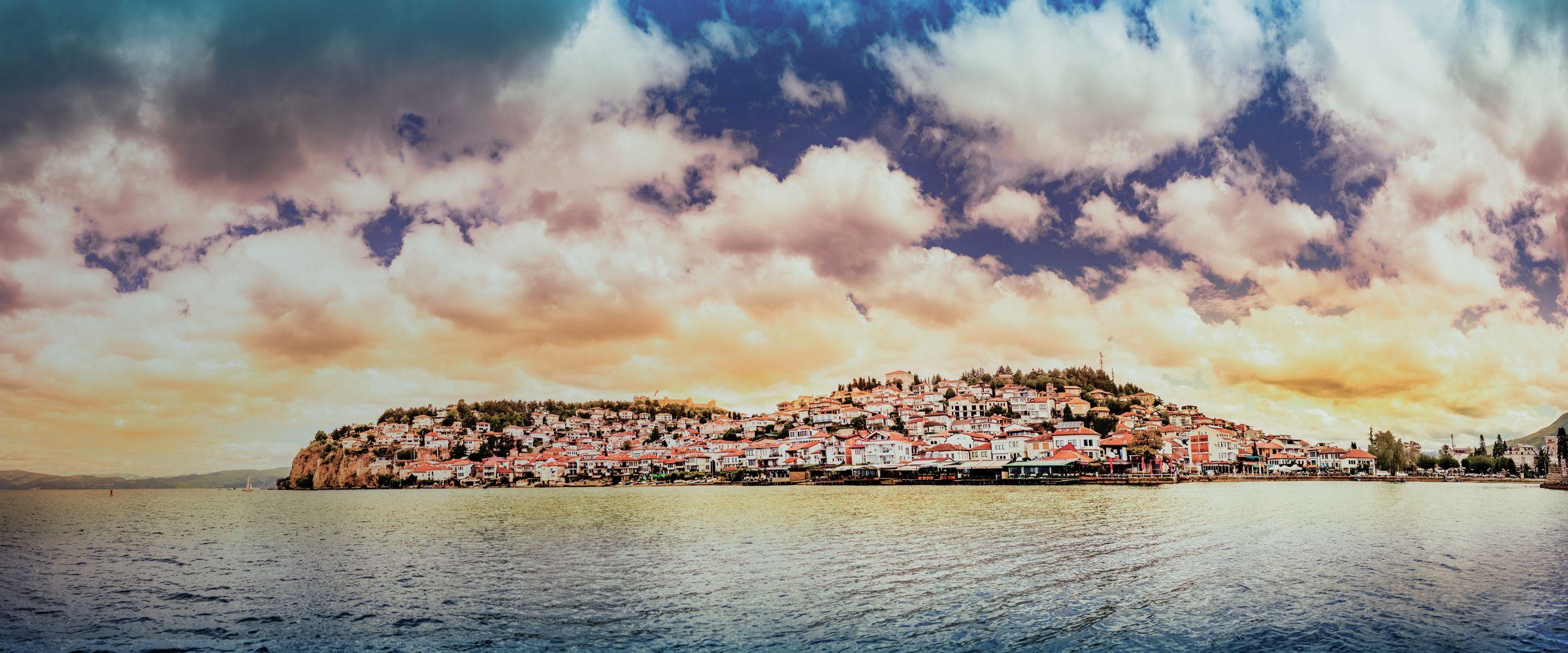
Romania, Bulgaria, and North Macedonia, from the Romans to the rose harvest
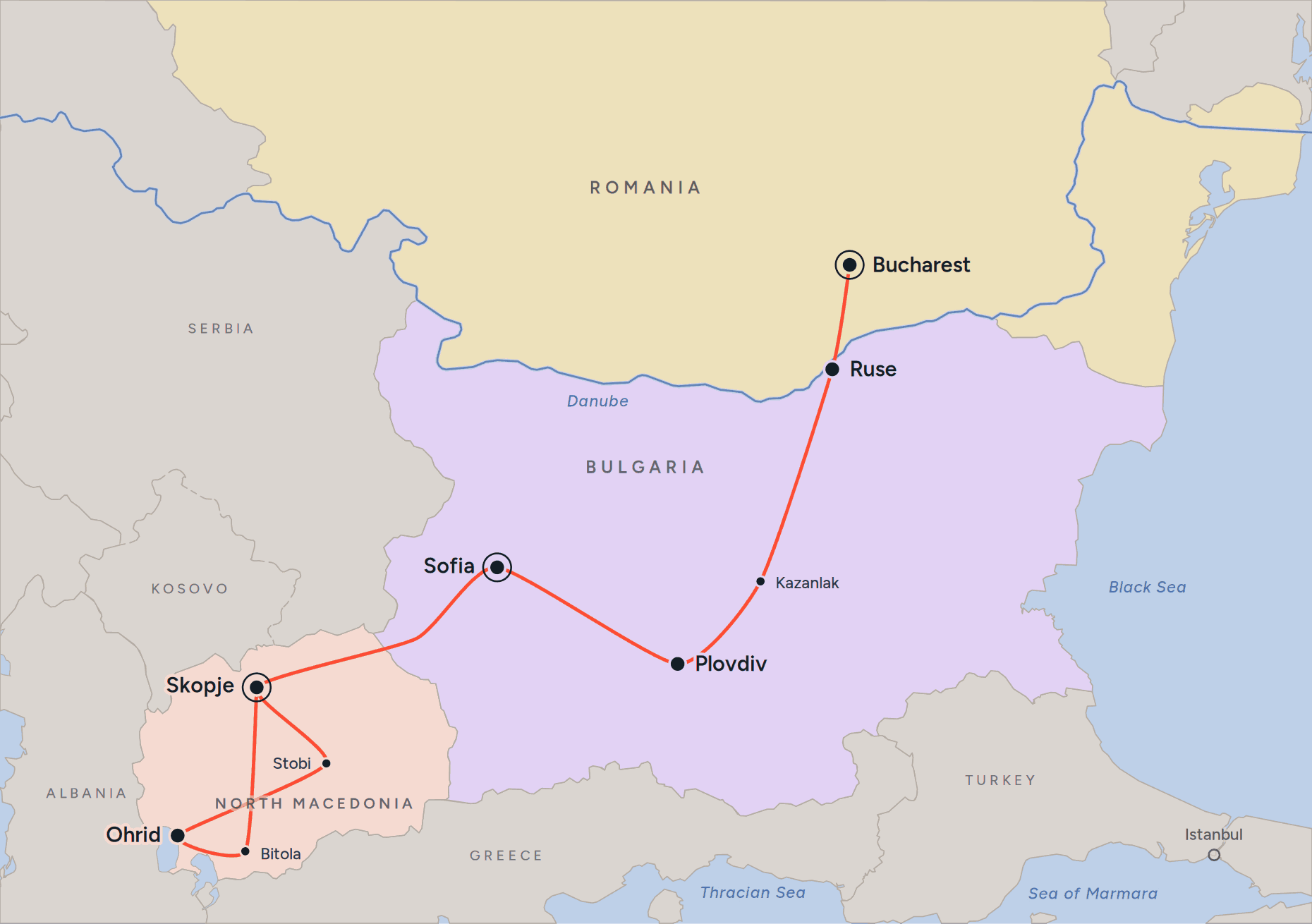
Fourteen days from Bucharest to the shores of Lake Ohrid, following Jewish life across the Danube and south through the Ladino-speaking cities of the Balkans, past Roman synagogue floors and the rose harvest of the Bulgarian valleys.
About this expedition
Explore Romania, Bulgaria, and North Macedonia, following Jewish life through a region where borders changed repeatedly while the roads, markets, languages, and communities stayed connected. We begin in Bucharest, cross the Danube into Bulgaria, travel south through Ruse, Veliko Tarnovo, Plovdiv, and the Rose Valley, and continue through Sofia into North Macedonia for Skopje, Stobi, Ohrid, and Bitola.
Jewish history here reaches much further back than the familiar story of the Sephardic Balkans. Ancient synagogue remains at Plovdiv and Stobi attest to organized Jewish life nearly two thousand years ago. Ruse and Bitola, once Ruschuk and Monastir, belonged to the Ladino-speaking Ottoman world of merchants, rabbis, schools, and synagogues. Bucharest, Sofia, and Skopje carry three neighboring states’ divergent wartime histories, where rescue and destruction were often the work of the same government.
The route follows another history as well. Veliko Tarnovo and the Balkan passes mark the rise, fall, and rebirth of the Bulgarian state. Ohrid is a medieval center that Bulgarians and Macedonians both claim as foundational, and the two countries tell the story of that shared past differently.
Much of the journey happens outdoors, listening to local music and eating delicious meals. We travel through the Rose Valley during the harvest, cross the Balkan Mountains, and spend time in the old cities of Plovdiv and Skopje and on the shore of Lake Ohrid.
Bucharest. The Choral Temple rises from the streets of the old Jewish quarter, where synagogues, schools, theaters, workshops, and homes once formed one of the great Jewish urban worlds of southeastern Europe.
Three histories run through this journey. At Plovdiv, the mosaic floor of the ancient synagogue of Philippopolis survives from the Roman city, and at Stobi the remains of a synagogue built in the second century stand among the oldest in Europe. They now sit on opposite sides of a border drawn some seventeen hundred years later.
In Sofia and Kyustendil we follow the intervention that halted the deportation of Jews from Bulgaria’s prewar territory. In Skopje and Bitola we find what happened to the Jews of Macedonia, whom the same government deported from the lands it occupied.
At Ohrid we reach a medieval capital that Bulgarians and Macedonians both claim.
The itinerary is built around longer stays. We spend two or three nights in most places and travel by private coach throughout. Only two stops are single nights: Ruse on the Danube and Skopje at the end, before the morning departing flight.
We aim to leave room in the day rather than fill it, with unhurried meals and time that is not scheduled.
Historic centers in this region have cobblestones, stairs, and uneven ground. Where a site can be seen from below or climbed, the main group program takes the easier route, and the climb stays open to anyone who wants it.
Local historians, guides, and scholars read each place with us from the inside.
The road matters too. Borders, mountains, and former capitals explain much of what we find when we arrive.
The expedition asks only for curiosity. Reading and talks along the way supply the background.
This is a moderately active cultural journey.
Travelers should be comfortable walking on cobblestones and uneven historic surfaces, navigating some stairs, and standing during guided visits. The itinerary uses a private coach throughout and is designed to minimize hotel changes and long travel days.
More strenuous site visits will be optional wherever practical.
makeityours
Membership puts you at the center of what we do