Our Team's Recommendations for March

Every month we put the spotlight on New Lehrhaus staff and share a cultural wonder that’s caught our attention. We hope it’s a unique way to get to know us and discover something that sparks your imagination.

Reading, Watching, Listening Alongside Us

These are not exhaustive guides or paid endorsements. They are just the kinds of books, films, and other discoveries that have been lingering in our minds, illuminating our work, or opening fresh paths into the worlds our courses explore.

Poster for Tinghir-Jerusalem: Echoes from the Mellah
WATCH
Jim Mavrikios

Jim recommends

Tinghir-Jerusalem: Echoes from the Mellah

A moving documentary and a perfect companion to our upcoming Judeo-Moroccan Arabic 1 course. The film captures the voices of a generation that still speaks this endangered dialect, following its journey from the Moroccan Atlas Mountains to the communities where it lives on today.

Having taught Moroccan Arabic for years and authored a textbook on it, Jim suggests this film as a rare opportunity to hear the language spoken by those who grew up with it.

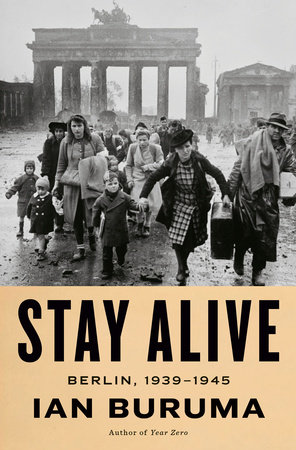
Cover of Stay Alive: Berlin 1939-1945
READ
Elle Aviv

Elle Aviv recommends

Stay Alive: Berlin 1939-1945

Elle Aviv is just beginning to read this much-anticipated book by Dutch historian Ian Buruma, former editor of the New York Review of Books. A chronicle of life in the German capital under the Third Reich, it asks what everyday people did as the state descended into increasingly brutal totalitarianism.

One such adaptation concerned how people said goodbye: as Allied bombing intensified and the Red Army drew nearer, Berliners dropped “Auf Wiedersehen” for “Bleiben Sie übrig” (“Stay alive”). By war’s end, Berlin’s population of 4.2 million had fallen by nearly half.

Find it at your local independent bookstore or library.

Cover of Why This World: A Biography of Clarice Lispector
READ
Robby Adler Peckerar

Robby recommends

Why This World: A Biography of Clarice Lispector

Benjamin Moser’s biography is ideal preparation for our upcoming course on Clarice Lispector. It traces her life from Chechelnyk in Podolia—yes, the same corner of Ukraine that produced Rabbi Nachman of Bratslav—through immigration to Recife, years in Europe and Washington, DC, and finally to Rio, where she became a literary icon and made Portuguese do things it had never done before.

Moser shows how the strangeness that has mystified Lispector’s readers for decades has deep roots in Jewish textual and mystical traditions, making her as much an heir to Nachman and Kafka as to any Brazilian modernist.

Find it at your local independent bookstore or library.

Join our email list

Stay Connected